
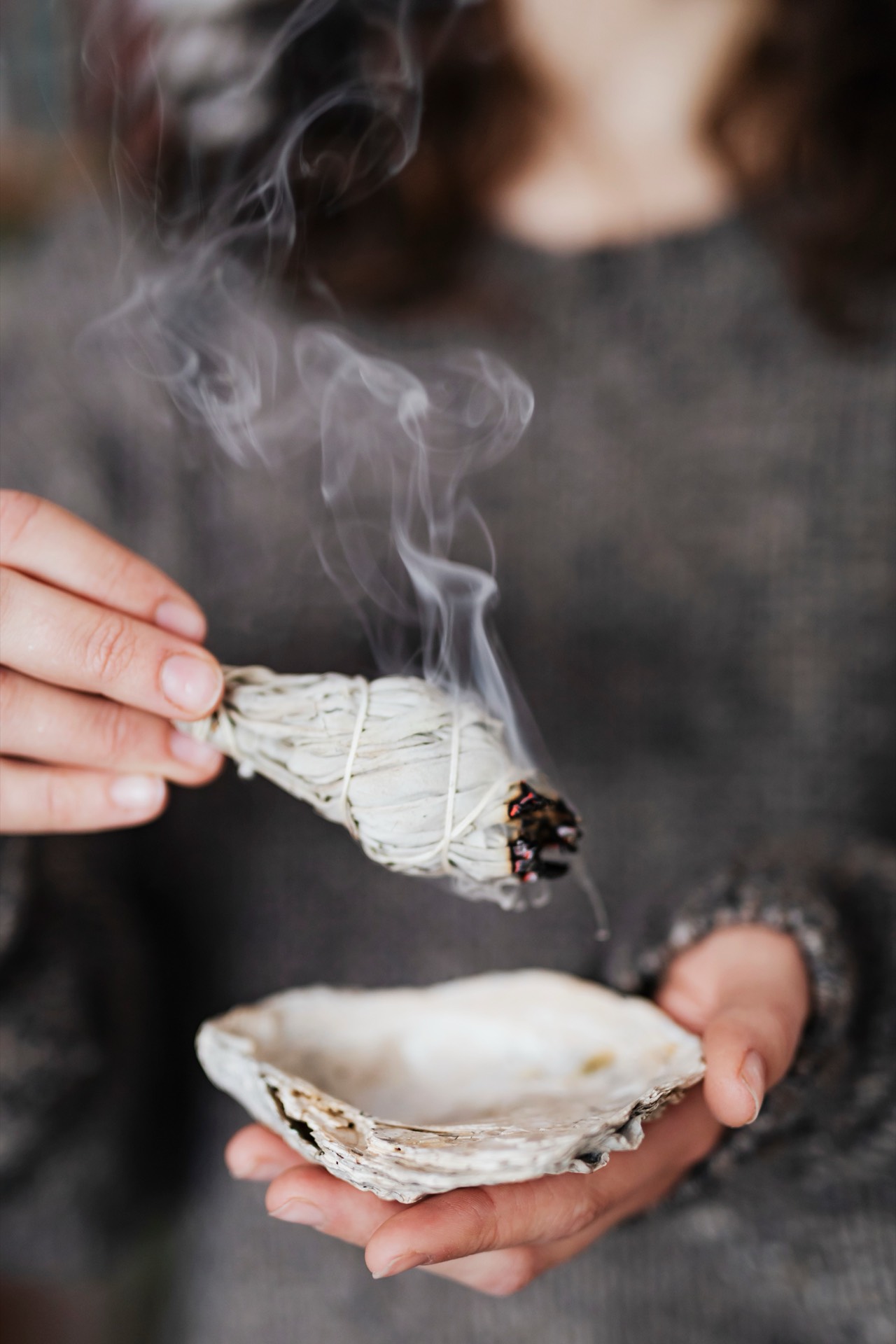
In a world where our environments and energies can become cluttered with stress, negativity, and stagnant emotions, the practice of smudging offers a profound way to cleanse and refresh both our physical spaces and our inner selves. Rooted in ancient traditions across cultures, smudging involves burning sacred herbs to create a cleansing smoke that purifies the air and promotes spiritual well-being.
What is Smudging?
Smudging is a ritualistic practice that involves burning dried herbs and plants to create smoke. This smoke is believed to have cleansing, purifying, and healing properties, both for physical spaces and spiritual energies.
Common Herbs Used in Smudging
White Sage (Salvia apiana): Native to North America, white sage is perhaps the most well-known herb used for smudging. It is valued for its strong cleansing properties and is believed to dispel negative energies, purify the environment, and promote healing.
Palo Santo (Bursera graveolens): Originating from South America, Palo Santo translates to "holy wood" in Spanish. It has a sweet, uplifting aroma when burned and is used to clear negative energy, enhance creativity, and bring about a sense of tranquility.
Cedar (Thuja spp.): Cedar is revered by Indigenous peoples of North America for its purifying qualities. It is burned to cleanse spaces, protect against negative influences, and promote grounding and strength.
Sweetgrass (Hierochloe odorata): Sweetgrass is traditionally used by Native American tribes, particularly in ceremonies following smudging. Its sweet scent is believed to attract positive energy and blessings.
How to Perform a Smudging Ritual
- Prepare Your Space: Choose a quiet area where you can perform the smudging ritual without distractions. Open windows and doors to allow negative energies to exit.
- Light the Herb: Use a match or lighter to ignite one end of your chosen herb bundle. Allow the flame to burn for a few seconds, then gently blow it out so that the herbs smolder and release smoke.
- Set Your Intention: Before you begin smudging, set a clear intention for the ritual. This could be to cleanse negative energies, invite positivity, promote healing, or simply create a sacred space.
- Smudge Yourself: Start at your feet and slowly move the smudge stick up and around your body in a circular motion, allowing the smoke to envelop you.
- Smudge Your Space: Walk clockwise around your home or room, moving from corner to corner. Focus on areas where energy feels heavy or stagnant.
- Closing the Ritual: Once you have smudged your space, extinguish the herb bundle by pressing it into a fireproof container. Express gratitude for the cleansing energies.
Benefits of Smudging
- Clearing Negative Energy: The smoke from burning herbs is believed to neutralize negative ions in the air, clearing away stagnant or harmful energies.
- Promoting Relaxation: The ritual of smudging can induce a sense of calm and relaxation, reducing stress and anxiety.
- Enhancing Spiritual Awareness: Many practitioners find that smudging enhances spiritual connection, intuition, and mindfulness.
- Purifying the Air: Scientific studies have shown that burning certain herbs can have antimicrobial properties, effectively purifying the air.
Cultural Considerations and Respect
Smudging practices originate from diverse cultural traditions, including Indigenous peoples of North America. It is essential to approach smudging with respect and awareness of its cultural significance. When sourcing herbs like white sage and Palo Santo, prioritize sustainable and ethical suppliers.
Whether you are looking to cleanse your living space, enhance your meditation practice, or simply create a sanctuary of peace and positivity, smudging offers a beautiful and accessible way to nurture your well-being on multiple levels.